Mobile version coming soon
🧑💻 Oops, no mobile magic yet
This portfolio is best viewed on a larger screen—for now!
Between projects, parenting, and the daily rush, I haven’t had time to build the mobile version yet.
Thanks for your patience and for stopping by anyway!
I swear I’m working on it… right after I finish this project, feed the kid, answer 27 emails, and maybe sleep a bit.
Until then, try visiting from a bigger screen. It’ll be worth it—I promise!
Designing human-centered automation for high-risk financial decisions
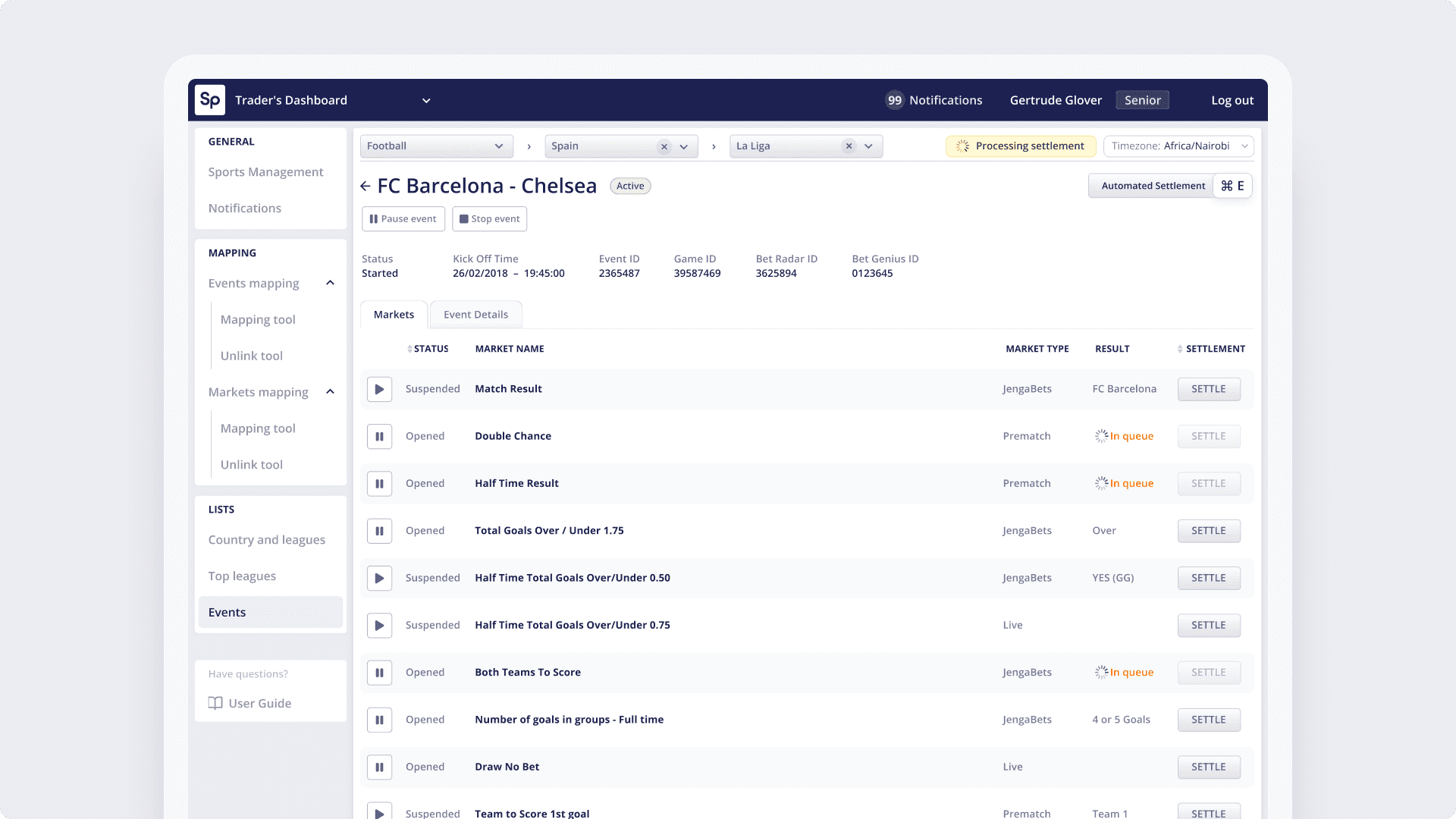
Manual settlement in sports trading is a high-risk workflow where small errors can lead to significant financial losses. I designed a hybrid automation system that balances automation with human control, reducing errors, increasing confidence, and accelerating event closure.
+52%
task completion rate
−38%
time spent per event
+40%
increase in user confidence
−44%
faster error recovery
Problem
High-risk manual settlement with frequent inconsistencies and low trust in automation.
Solution
Human-centered automation with clear system states and reviewable decisions.
Impact
Fewer errors, faster operations, and higher confidence in automated outcomes.
My role
Senior Product Designer
Markets
UK, Italy, Kenya, South Africa, and Tanzania
Timeline
4-week product discovery and design sprint
Tools and systems
Figma · Jira · Confluence · Hotjar · Internal trading platform
01
Context
Settlement is the process of validating and closing betting markets after an event ends.
For traders, this means reviewing multiple interconnected outcomes, resolving inconsistencies, and making fast decisions in a high-stakes environment where accuracy directly affects payouts and trust.
And this wasn’t happening in a small, controlled workflow. The platform supported a large volume of events and betting markets across sports, countries, and competitions.
During weekends—when the number of live sports events increased significantly—this complexity scaled even further. At that level, even minor inefficiencies could quickly lead to delays, errors, and operational strain.
Operational scale
The settlement workflow had to support a high volume of interconnected markets across multiple sports and regions—especially during peak weekends.
57 countries
11 sports
per country
+5 leagues
per sports
24 avg. markets
per event
02
Team & Collaboration Model
Although traders were the primary users of the workflow, the problem was much broader than a single operational task.
Settlement decisions had downstream effects across multiple areas of the business—impacting customer support, trading operations, product priorities, technical implementation, and ultimately user trust.
To understand the full scope of the problem, I worked cross-functionally with stakeholders across product, business, operations, design, data, and engineering. This made it possible to frame the challenge more holistically and design a solution that responded not only to user needs, but also to business and operational realities.
03
The Problem
The settlement process relied heavily on manual validation under time pressure, leading to errors, delays, and low trust.
Traders had to validate multiple interconnected outcomes across markets through fragmented workflows, making accurate decisions difficult to sustain at scale.
As a result, settlement errors were frequent, event closure became slower, and payouts were delayed.
The problem directly impacted user trust
These operational challenges didn’t stay internal. They directly affected the user experience and trust in the platform.
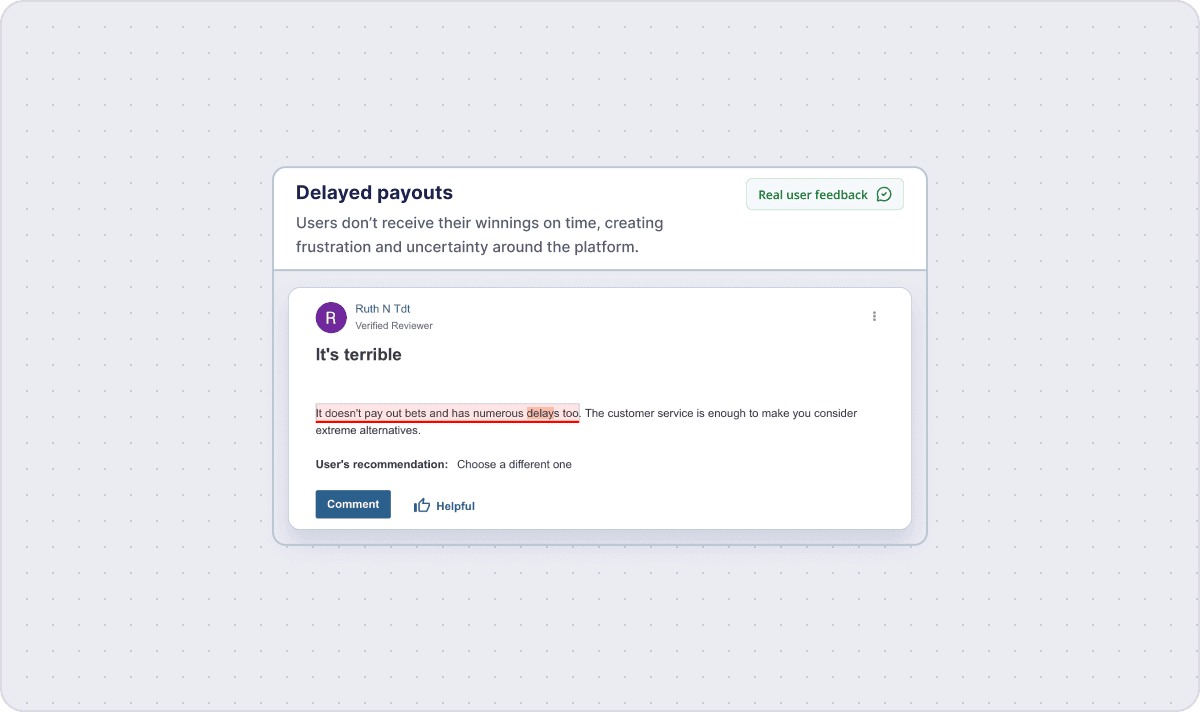
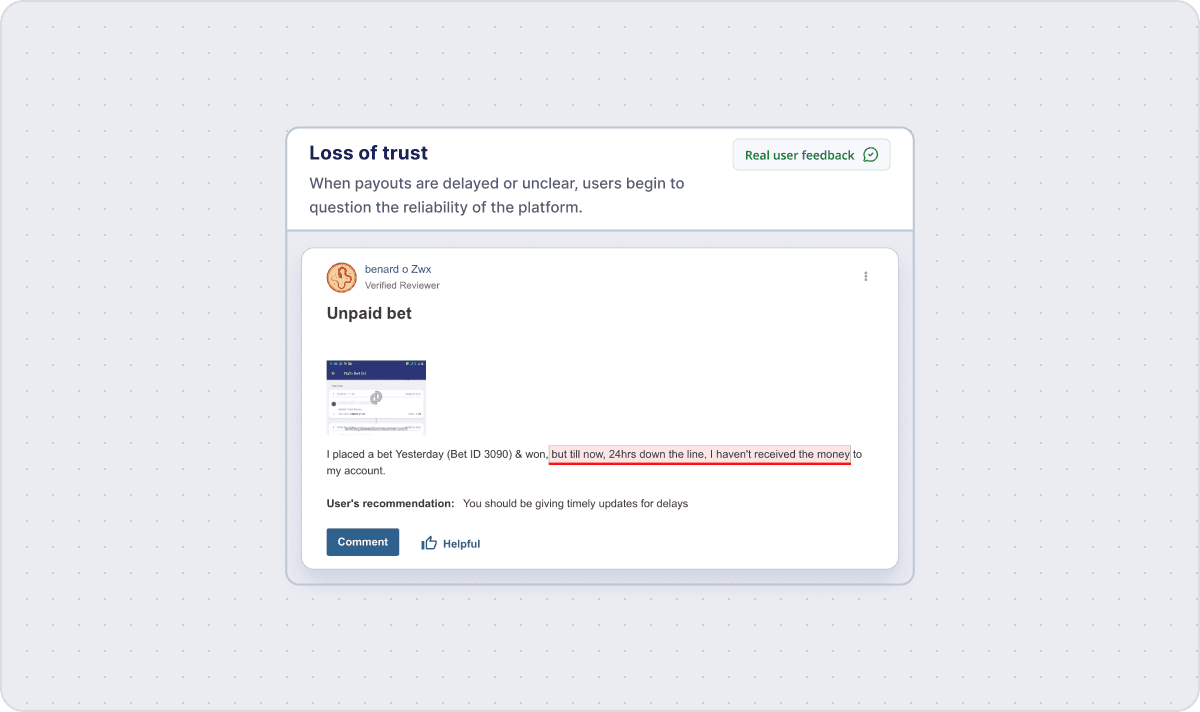
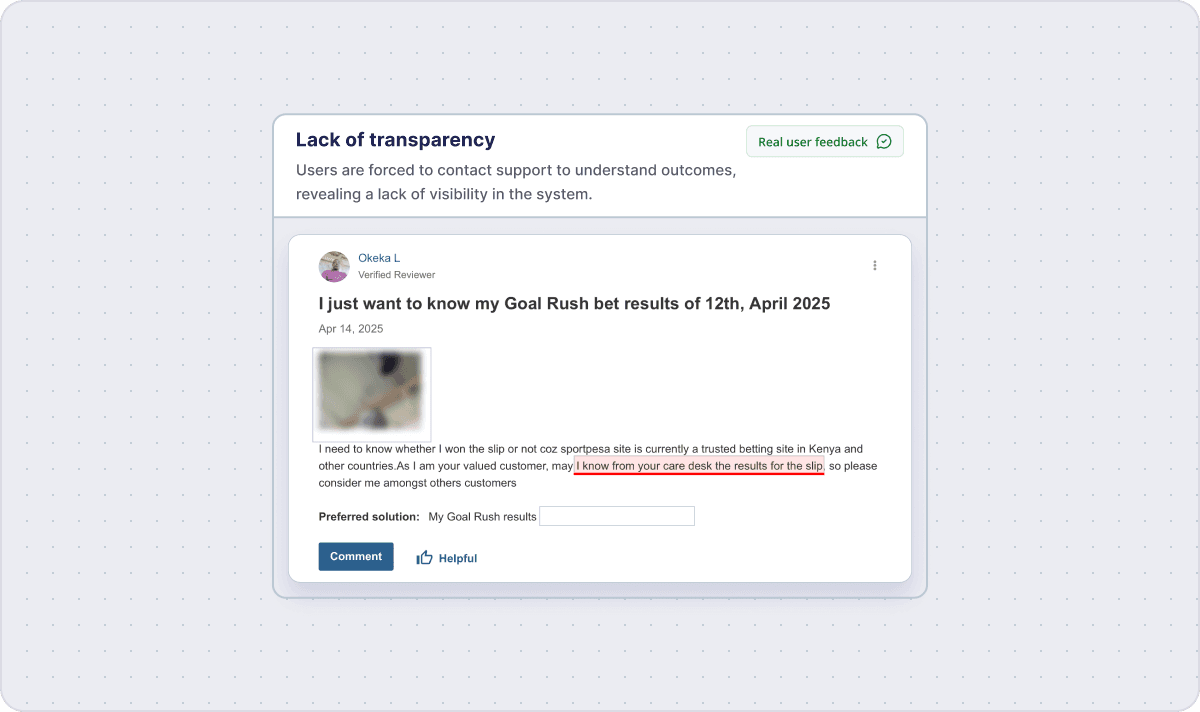
This external feedback made it clear that the problem was not only operational—it was directly impacting how users experienced and trusted the product.
To better understand the root causes behind these issues, I worked closely with traders and observed how settlement decisions were made in real workflows.
04
Discovery
To better understand the problem, I spent time with traders in their day-to-day environment, observing how settlement decisions were made in real workflows.
I wanted to understand not just what users were doing, but how they were thinking under pressure—what they checked first, where uncertainty appeared, and which parts of the system created hesitation or extra effort.
These observations revealed that the challenge was not only about interface usability, but about supporting confident decision-making in a fast, high-risk operational context.
Contextual observation made it possible to understand how traders balanced speed, accuracy, and trust in real decision-making moments.
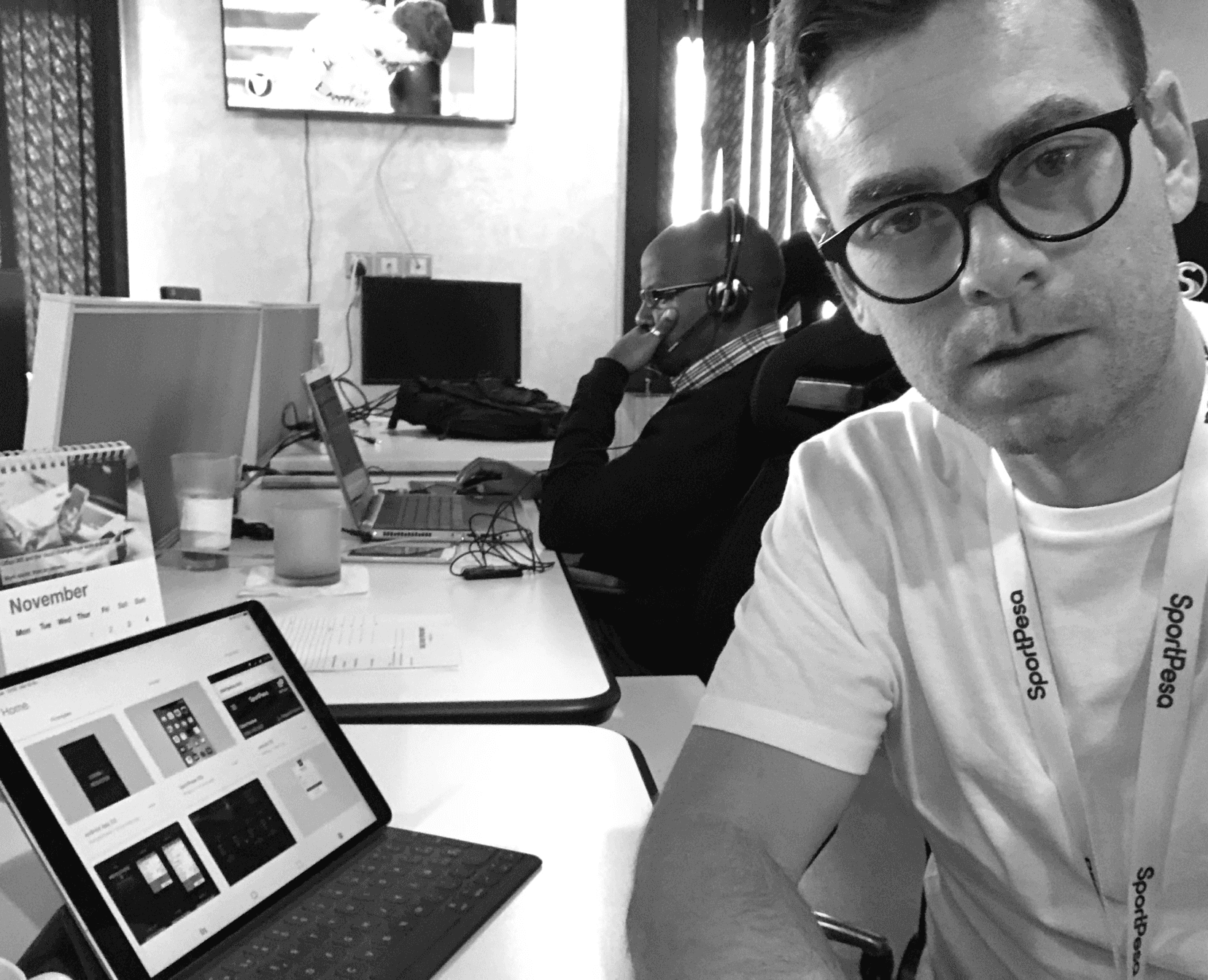
Contextual observation
Understanding decision-making under pressure
Participants
Games experts, traders, and mathematical analysts
Environment
Live settlement operations
Scale
400+ traders across multiple countries
05
What we learned
Through contextual observation and cross-functional collaboration, a few key patterns emerged.
These insights helped reframe the problem—not as a purely usability issue, but as a challenge of supporting fast, reliable decision-making in a complex operational system.
Errors were driven by inconsistency, not complexity alone
Many errors were caused by inconsistencies between related outcomes.
Implication
Validation needed to be unified and system-supported.
Users didn’t lack skill—they lacked confidence in the system
Uncertainty came from lack of system feedback, not lack of knowledge.
Implication
The system needed to make its logic and state more visible.
Automation without control reduces trust
Users wanted support, not full automation.
Implication
The solution needed to balance automation with human validation.
06
From insight to system design
The next step was to translate these insights into a workflow that could better support fast, reliable decision-making.
Rather than treating the problem as a set of isolated usability issues, I approached it as a system design challenge: how to reduce cognitive load, improve visibility, and help traders move with more confidence under pressure.
This meant rethinking not only the interface, but the structure of the interaction itself.
07
Redefining the interaction model
One of the biggest opportunities was simplifying how settlement decisions were structured.
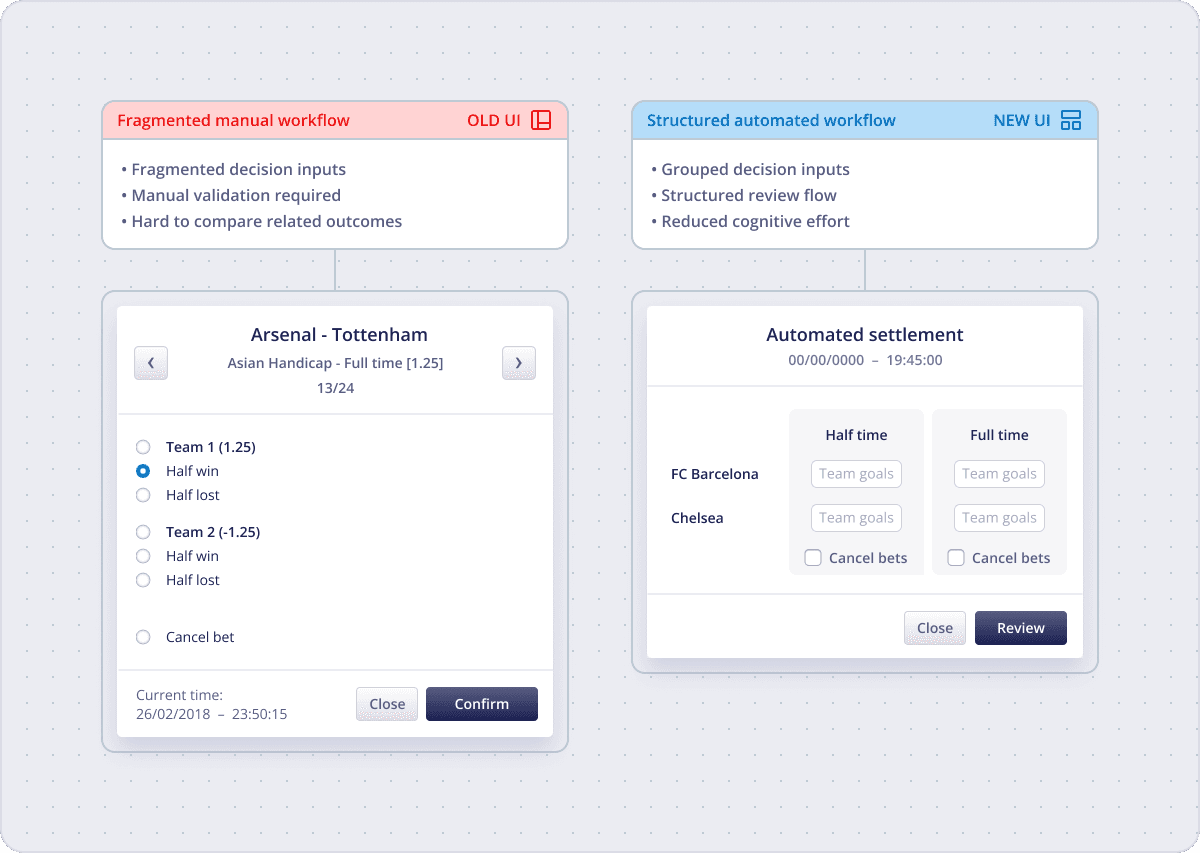
The previous workflow required traders to mentally reconcile related outcomes across fragmented interactions, increasing cognitive effort and making validation more difficult than necessary. Users had to remember match results while manually identifying and selecting the betting markets associated with those outcomes.
The redesigned interaction model grouped related decisions into a clearer and more structured workflow. Traders could now enter match results directly, triggering an automated settlement process that organized related markets automatically. This made it easier to review resolved outcomes, compare related markets, and make decisions with less effort.
By reducing the amount of mental reconciliation required, the new workflow became easier to scan, understand, and review—supporting faster and more confident decision-making in a high-risk operational environment.
08
Final solution
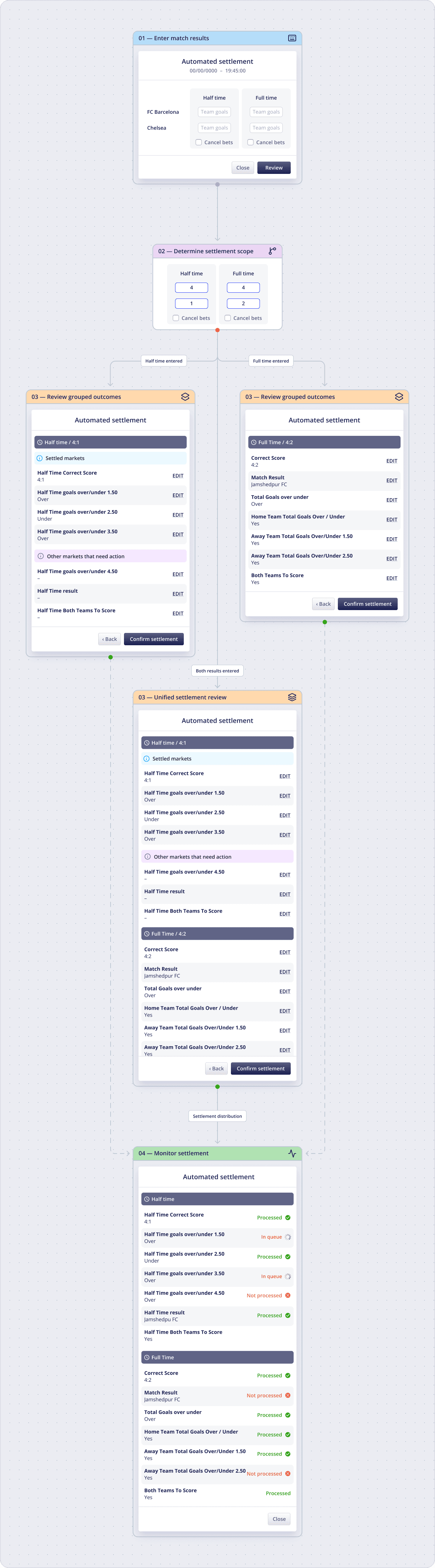
The final solution introduced a more guided and structured settlement flow, where automation supports the process while keeping users in control of critical decisions.
Rather than asking traders to manually review everything, the system helps surface what matters, reduces repetitive effort, and makes system status more visible throughout the workflow.
This creates a more reliable experience for both operational users and the wider business.
How automated settlement works
Traders can enter half-time, full-time, both results or cancel bets (refund)
The system then settles relevant markets automatically and highlights only what needs review.
09
Trade-offs we made
Designing for this workflow required balancing competing priorities.
The solution needed to increase speed without reducing confidence, simplify decision-making without hiding important detail, and introduce automation without removing user control.
These trade-offs shaped many of the final interaction decisions and helped ensure the system remained both efficient and trustworthy in a high-risk environment.
10
Impact
The redesign improved the internal settlement workflow, but the value extended beyond trader efficiency. Faster and more reliable settlement decisions reduced uncertainty for users waiting for bet outcomes and payouts.
By helping traders validate grouped outcomes with more confidence, the system reduced downstream friction: fewer delayed payout complaints, fewer support contacts, and clearer communication around settlement status.
Operational impact
For traders and settlement teams
+52% Task completion rate
-38% Time spent per event
+40 Increase in user confidence
-44% Faster error recovery
Customer impact
For end users and bettors
-31% Delayed payout complaints
-27% Settlement-related support contacts
-22% Time to payout confirmation
+18 pts Perceived platform trust
11
What this reinforced for me
This project reinforced that automation alone does not create better systems.
In high-risk operational environments, trust is built through clarity, transparency, and control. The role of design is not just to make workflows faster, but to help people make better decisions with confidence.
It also reminded me that the most effective solutions often come from understanding problems beyond the interface—across operations, business constraints, and real user behavior.
Let’s connect
Thanks for reading! If you’re hiring, collaborating, or just curious about my work — feel free to drop me a line. I’d love to hear from you.
Title
Sector
Year

©
2026
David Gopar